
Last updated on
Oct 31, 2026
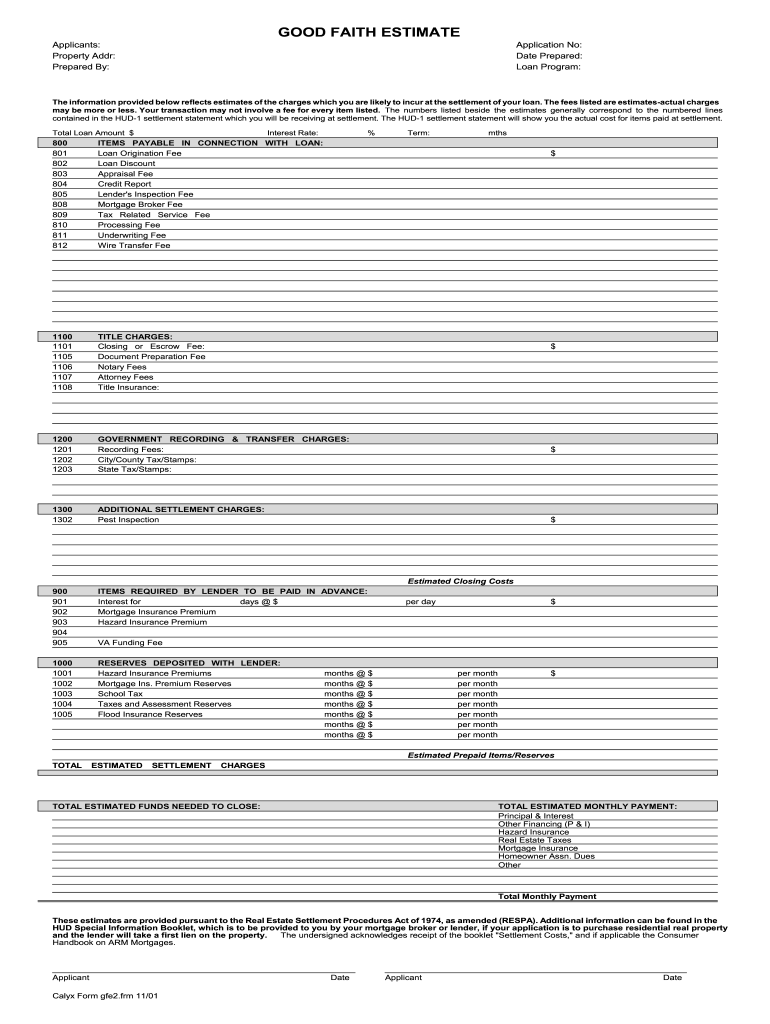
Calyx gfe2.frm 2001-2026 free printable template
pdfFiller is not affiliated with any government organization

Fill out
Complete the form online in a simple drag-and-drop editor.

eSign
Add your legally binding signature or send the form for signing.

Share
Share the form via a link, letting anyone fill it out from any device.

Export
Download, print, email, or move the form to your cloud storage.
Why pdfFiller is the best tool for your documents and forms


End-to-end document management
From editing and signing to collaboration and tracking, pdfFiller has everything you need to get your documents done quickly and efficiently.
Accessible from anywhere
pdfFiller is fully cloud-based. This means you can edit, sign, and share documents from anywhere using your computer, smartphone, or tablet.
Secure and compliant
pdfFiller lets you securely manage documents following global laws like ESIGN, CCPA, and GDPR. It's also HIPAA and SOC 2 compliant.
What is Calyx gfe2.frm
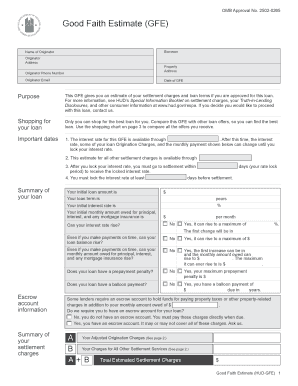
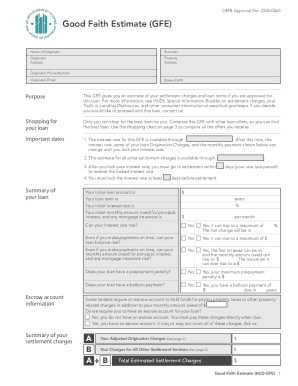
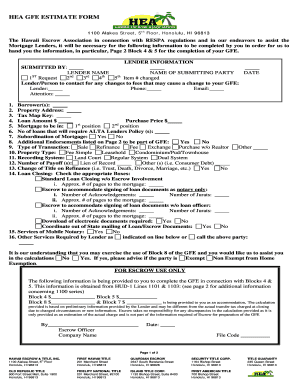
The Good Faith Estimate is a real estate document used by borrowers in the US to estimate settlement charges when obtaining a loan for residential property.
pdfFiller scores top ratings on review platforms




Who needs Calyx gfe2.frm?
Explore how professionals across industries use pdfFiller.

Calyx gfe2.frm is needed by:
-
Homebuyers seeking to understand their loan costs
-
Real estate agents assisting clients with financing
-
Lenders providing loan estimates to borrowers
-
Mortgage brokers advising on loan options
-
Title companies detailing closing costs
-
Investors evaluating potential real estate acquisitions
Comprehensive Guide to Calyx gfe2.frm
What is the Good Faith Estimate?
The Good Faith Estimate (GFE) is a crucial document in the real estate loan process, designed to provide borrowers with an estimate of settlement charges. Its significance lies in ensuring transparency and fairness as mandated by the Real Estate Settlement Procedures Act (RESPA). The GFE serves to inform applicants about potential costs associated with obtaining a mortgage, enabling them to make well-informed decisions. Key features of the GFE include loan origination fees, title charges, and various other expenses that will be incurred during the settlement process.
Purpose and Benefits of the Good Faith Estimate
The GFE is essential for borrowers as it promotes transparency in the loan acquisition process. By offering a detailed mortgage estimate form, it allows applicants to compare different loan options effectively. This comparison is vital, as it provides clarity on various settlement charges, ultimately aiding in the decision-making process. Additionally, the GFE fosters trust between applicants and lenders by outlining expected costs, ensuring that borrowers are well-informed before finalizing any agreements.
Key Features of the Good Faith Estimate
A Good Faith Estimate encompasses several key components, including:
-
Loan origination fees, which represent the cost of processing a mortgage application.
-
Title charges, which cover the cost of transferring ownership of the property.
-
Government recording fees, necessary for processing documents through public records.
-
The timeline within which the GFE must be provided to borrowers, typically three business days after application.
Understanding these features is essential for applicants, as they outline the financial obligations tied to their mortgage journey.
Who Needs the Good Faith Estimate?
The Good Faith Estimate is designed for potential mortgage borrowers and is applicable in various scenarios, particularly when applying for real estate loans. Both applicants and lenders play vital roles in this process. Applicants benefit by receiving a clear breakdown of their anticipated costs, while lenders ensure compliance with RESPA regulations by providing this essential document.
How to Fill Out the Good Faith Estimate Online (Step-by-Step)
Completing the Good Faith Estimate online is a straightforward process. Here are the steps to follow:
-
Locate the "Application No:" field and enter your unique application identifier.
-
Fill out the "Estimated Closing Costs" section with accurate financial data.
-
Provide any required personal information, ensuring all fields are populated correctly.
-
Review your entries for accuracy to avoid potential issues.
-
Submit the completed GFE through the designated online portal.
Gathering accurate information is crucial for smooth processing, minimizing the likelihood of delays.
Common Errors and How to Avoid Them When Filling Out the Good Faith Estimate
When completing the Good Faith Estimate, applicants often encounter several common mistakes, including:
-
Leaving fields blank or entering inaccurate information.
-
Failing to understand the terminology used in the form.
-
Not reviewing the document before submission.
To minimize these errors, applicants should ensure they understand all requirements and double-check each section of the form before finalizing their submission.
How to Sign or Notarize the Good Faith Estimate
Signing the Good Faith Estimate is an essential step in acknowledging receipt of the document. Borrowers can choose between a digital signature or a wet signature, depending on the platform being used. Notarization is typically not required for the GFE, but confirming specific requirements with lenders is prudent to avoid any compliance issues.
How to Submit the Good Faith Estimate and What Happens Next
Submitting the Good Faith Estimate can be accomplished in several ways:
-
Online via the lender’s submission portal.
-
By email, if permitted by the lender.
-
Via postal mail for traditional submissions.
After submission, borrowers can expect processing to take place within a specified timeframe. For tracking the status of the application, contacting the lender directly for updates is recommended.
Security and Compliance When Handling the Good Faith Estimate
When managing the Good Faith Estimate, ensuring data protection is paramount. Utilizing platforms like pdfFiller enhances privacy and data security while complying with regulations such as RESPA. Adhering to these measures safeguards sensitive information against potential breaches, providing peace of mind for both borrowers and lenders.
Simplify Your Good Faith Estimate Process with pdfFiller
pdfFiller offers tools that help users in completing the Good Faith Estimate efficiently. Key features include:
-
Electronic signature capabilities for easy signing.
-
Form-filling functions that streamline the process.
-
Robust document security measures to protect sensitive information.
Leveraging pdfFiller's capabilities can lead to a hassle-free experience while managing your Good Faith Estimate.
How to fill out the Calyx gfe2.frm
-
1.Access pdfFiller’s website and sign in or create an account to get started.
-
2.Search for the 'Good Faith Estimate' form using the search bar for easy access.
-
3.Open the form in the pdfFiller editor by clicking on it from your search results.
-
4.Use the toolbar to navigate; click on each blank field to enter required information, such as your name, address, and loan terms.
-
5.Before starting, gather necessary information including loan amounts, estimated interest rates, and potential closing costs.
-
6.Fill out the estimate details for loan origination fees, title charges, and government recording fees within the designated sections.
-
7.Carefully review each entry to ensure accuracy and completeness while you fill in the form.
-
8.Once all fields are completed, use the 'Review' function to double-check your inputs against the required details of the Good Faith Estimate.
-
9.To save the completed form, click 'Save' and choose your preferred file format for downloading.
-
10.You may also choose to submit the form directly from pdfFiller via email or download it to your device for future use.

What is the purpose of the Good Faith Estimate?
The Good Faith Estimate provides borrowers with a clear estimate of settlement charges they may incur when applying for a loan. Required by RESPA, it ensures transparency in lending.
Who is required to sign the Good Faith Estimate?
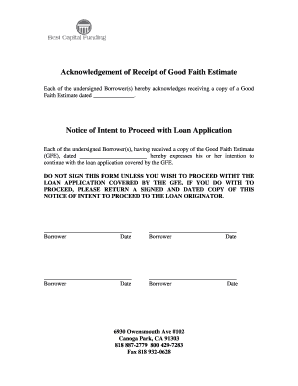
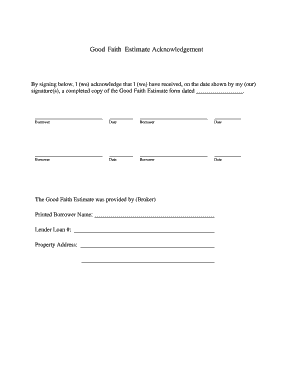
The applicant borrowing money for residential real property is required to sign the Good Faith Estimate to acknowledge receipt of the form and the HUD Special Information Booklet.
When should I receive my Good Faith Estimate?
Lenders must provide the Good Faith Estimate to borrowers within three business days of receiving a loan application, ensuring you have enough time to review associated costs.
What information do I need to fill out the Good Faith Estimate?
You will need information such as your loan amount, interest rate, estimated closing costs, and other relevant financial details. Having a HUD-1 settlement statement can also be beneficial.
What are common mistakes to avoid when completing the form?
Common mistakes include inaccurate estimates of closing costs, missing required fields, and failing to sign and date the form. Always double-check for completeness before submission.
How is the Good Faith Estimate different from other loan documents?
The Good Faith Estimate specifically outlines estimated closing costs, while other loan documents may detail terms of the loan itself, repayment plans, or other legal obligations.
Can I submit the Good Faith Estimate electronically?
Yes, you can submit the completed Good Faith Estimate electronically via pdfFiller, or download it to submit physically if required by your lender.
Related Content
Related Forms


Related Catalogs
Get the latest insights from our blog


If you believe that this page should be taken down, please follow our DMCA take down process
here
.
This form may include fields for payment information. Data entered in these fields is not covered by PCI DSS compliance.